SUPERBUY SPREADSHEET 2026: FIND AND CHECK PRODUCT LINKS.
A spreadsheet can shorten discovery, but the useful skill is turning a row of product data into a checked, budgeted and reversible buying decision.
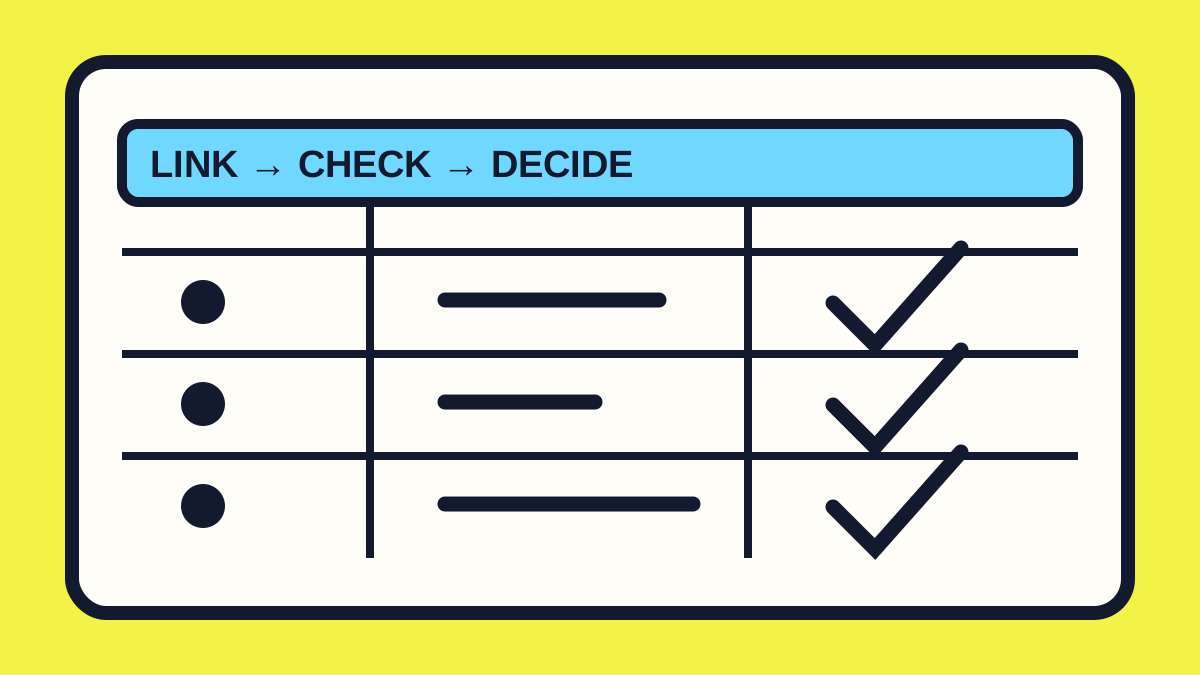
A Superbuy spreadsheet is an independently organized list of marketplace finds that may include a title, photo, category, price and source record. It can help a buyer search Taobao, Weidian, 1688 and other Chinese marketplace listings without starting from an empty search box. It cannot confirm that a seller still has stock, that the selected variation matches the photo, that the item is legally shippable to a destination or that the final parcel will be inexpensive. In 2026, that distinction matters more than the number of rows.
The most reliable way to use a spreadsheet is to treat it as a discovery layer in front of Superbuy’s purchasing and warehouse workflow. Superbuy’s current public materials describe shopping-agent purchasing, warehouse receipt, quality-check photos, parcel consolidation, a shipping calculator and parcel tracking. Those services create useful checkpoints, but they do not remove the buyer’s responsibility to interpret a live listing, select the intended variation and approve visible warehouse evidence. The spreadsheet should help you reach those checkpoints with fewer surprises.
Start with search intent, not a viral item
Write down what the item must do before opening a record. For clothing, that could mean a certain measurement range, fabric weight and color. For footwear, it could mean an insole length and whether the original box matters. For an accessory, it could mean material, dimensions and compatibility. This short requirement list protects you from selecting a product merely because its thumbnail looks familiar. It also gives you objective questions to ask when the marketplace page is unclear.
Use spreadsheet categories and search terms to narrow the set, then compare at least two plausible records. A low displayed price is not enough. Prefer records with a working source, a clear variation structure, understandable product photos and enough seller information to identify what will actually be ordered. When two rows appear to show the same item, differences in size, bundle contents, domestic shipping or seller history may explain the price gap. Put unresolved differences in a notes column instead of guessing.
Run a live-link check before adding anything
Open the current source record and confirm the hostname, item identity and available variations. A copied image or shortened redirect can outlive the listing that created it. Check whether the page now shows a different product, a changed seller or a replacement listing. Look at the selected color, size and bundle because marketplace pages often display the lowest variation price first. The image shown beside that price may not represent what the default choice includes.
Record the check date. Freshness is an operational field, not decoration. A record checked today is still not guaranteed tomorrow, but it is more useful than an undated row. If the source is missing, redirects unexpectedly or has no understandable variation, flag it rather than silently substituting a similar link. A maintained spreadsheet earns trust by making uncertainty visible and by removing dead records, not by preserving an impressive item count.
Read seller text and images together. Titles may be abbreviated, machine translated or written for domestic buyers who already understand the category. Product diagrams can reveal measurements, materials or bundle contents that the title omits. Customer images can add context, but they may represent older batches or different options. Your notes should separate what the current seller states from what another buyer experienced. That separation becomes important if warehouse evidence later contradicts expectations.
Capture the exact variation and price basis
Before submitting a shopping-agent order, save the selected variation in plain language. Include color, size, model, quantity and any bundle option. If the listing uses ambiguous codes, pair the code with a visible description. Take note of the item price and domestic delivery shown at that time, but label both as changeable. Discounts, coupons, seller shipping and platform promotions can update. A spreadsheet price should never be presented as a permanent offer.
Measurements require the same discipline. Marketplace size labels are not universal. Compare the seller’s measurement chart with an item you already own, allowing for measurement method and tolerances. If one missing measurement would change the decision, ask for clarification before purchase or plan a targeted warehouse measurement. “Large” is not a specification; chest width, length or insole length is. This practice reduces avoidable returns while the item is still inside China.
Separate product claims from observable attributes. Warehouse photos can often show color, obvious damage, quantity, logos, dimensions and included parts. They usually cannot prove fiber composition, internal construction, long-term durability or authenticity. If a claim cannot be verified through the listing, agent communication or visible inspection, price the order as if that uncertainty remains. This keeps a spreadsheet from turning marketing language into false certainty.
Estimate the whole order before paying
A useful 2026 spreadsheet needs more than an item-price column. Add domestic delivery, expected service costs, an international freight range and a customs contingency. International shipping is parcel-based. The stored weight may change after consolidation, retail packaging removal, protection and final measurement. Bulky light products may be billed by dimensional weight, while dense products are more likely to follow actual weight. Use low, expected and high scenarios instead of one optimistic number.
Check route eligibility before relying on a price. Batteries, liquids, magnets, cosmetics, food, branded goods and oversize products may have fewer available lines. Destination and current carrier rules matter. A cheap route that will not accept the parcel is not a real option. Use Superbuy’s live shipping tools when dimensions and weight are known, then compare the eligible services on tracking, estimated time, restrictions, compensation terms and tax handling—not just the headline rate.
Consolidation can distribute a first-weight charge across several items, but it can also create a larger billable parcel or mix incompatible goods. Plan at least one split scenario. A soft clothing parcel and a rigid, fragile product may need different packaging or routes. Do not buy extra items simply to make shipping feel efficient. Every added item increases product cost, inspection work and potential parcel complexity even if the average freight per kilogram falls.
Use warehouse QC as a decision gate
When an item arrives at the warehouse, compare the received record against your saved order specification. Check visible color, selected variation, quantity, obvious damage, major construction details and included accessories. Compare the stored weight with your working estimate. If a measurement is decisive and not visible, request the narrowest additional check that can answer the question. A vague request for “more photos” creates images; a request for a tape measure across a specific point creates evidence.
Decide before parcel submission whether the evidence is acceptable. Domestic return or exchange options are generally more practical before international dispatch, subject to seller terms, time limits and service conditions. Once an item is packed and sent abroad, the cost and difficulty of correcting a variation error rise sharply. Give every stored item a status such as accept, clarify, return, exchange or hold. Do not let storage time replace an explicit decision.
Keep screenshots or notes of the original record, selected variation, agent order and warehouse photos. This is not paperwork for its own sake. It helps distinguish a seller mismatch from a selection mistake and provides a timeline if support is needed. It also improves the spreadsheet: a record that repeatedly causes variation confusion should be annotated, moved to a caution group or removed even if the source link technically works.
Build a spreadsheet that stays useful
If you maintain a list for others, give each row a stable internal identifier, source URL, concise product name, category, last-checked date and status. Optional fields can include price observed, available sizes, estimated weight, restriction notes and the reason a record was retired. Use consistent category names so filtering works. Avoid copying seller claims into your own voice without qualification. Clear notes are more valuable than decorative labels that cannot be verified.
Mark affiliate or commercial relationships plainly if they exist. Explain that SuperbuyVIP is independent and that marketplace availability, product claims, legality and shipping eligibility require current verification. Do not imply that a product is official, authentic or safe merely because it appears in a spreadsheet. Search visitors are looking for a shortcut, but the responsible shortcut is a better checking sequence, not a promise that removes judgment.
Review high-traffic rows more often than obscure ones. Track dead-link reports and search terms that return no result. When a record changes, update the check date and describe the meaningful difference. When a product disappears, preserve the lesson but remove or clearly retire the shopping path. A smaller maintained list can generate more useful return visits than a huge archive of broken links because people can trust what the status fields mean.
A five-minute decision sequence
- Define: write the required variation, measurement and maximum landed cost.
- Verify: open the current source, identify the seller and confirm the exact option.
- Budget: include domestic delivery, packed-weight range, eligible routes and customs uncertainty.
- Inspect: compare warehouse evidence with the saved specification and request only decisive checks.
- Approve: keep, clarify, return or exchange before submitting the international parcel.
The best Superbuy spreadsheet in 2026 is not the one with the loudest item count. It is the one that makes source freshness visible, preserves exact variation details, exposes the cost beyond the listing price and leads cleanly into warehouse review. Use it as a map, then verify every important turn. That workflow produces fewer accidental purchases and gives each click a better chance of becoming an item you can actually ship, afford and use.